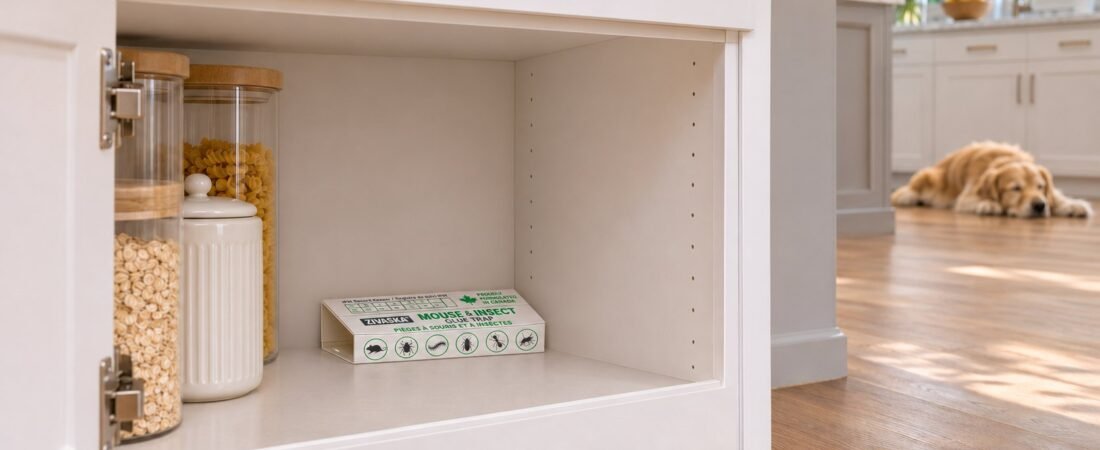
No trap is completely “pet-proof”, but you can trap safely with pets by avoiding poison, choosing enclosed rat traps, and placing traps where pets cannot reach: behind appliances, inside cupboards, under furniture or in areas your pet cannot access.
Skip poison if you have pets
Pets can eat bait directly or eat a poisoned rodent. Mechanical traps avoid that risk entirely.
Choosing traps
| Trap | With pets |
|---|---|
| Enclosed tunnel rat trap | Mechanism is covered, reducing accidental contact. Still place it where pets cannot reach. |
| Open snap trap | Exposed jaw; keep well away from pets. |
| Sticky glue trap | Paws and fur can get stuck; place only where pets cannot go. |
Placement that keeps pets away
- Behind the fridge, stove and washer
- Inside lower cupboards and under sinks
- In rooms or garages the pet cannot enter
- Inside a cardboard box with a mouse-sized opening (for glue traps)
- Outdoors: under a deck or inside a shed, not on open lawn
If a pet touches a glue trap
Do not pull. Gently work vegetable oil or cooking oil into the glue to loosen it, then wash with mild dish soap. If your pet is distressed, injured or you are not sure, call your veterinarian.
Frequently asked questions
Are rat traps safe for dogs and cats?
No trap is fully pet-proof. Enclosed traps reduce accidental contact, but you should still place traps where pets cannot reach them, and avoid poison.
How do I get a glue trap off my dog or cat?
Do not pull. Work vegetable or cooking oil into the glue to loosen it, then wash with mild dish soap. Call your veterinarian if your pet is distressed or injured.
Is rat poison dangerous to pets?
Yes. Pets can eat bait or a poisoned rodent. Mechanical traps avoid that risk.
ZIVASKA is a Canadian, women-owned small business in Burnaby, BC. Free shipping across Canada; orders ship within 1 business day.