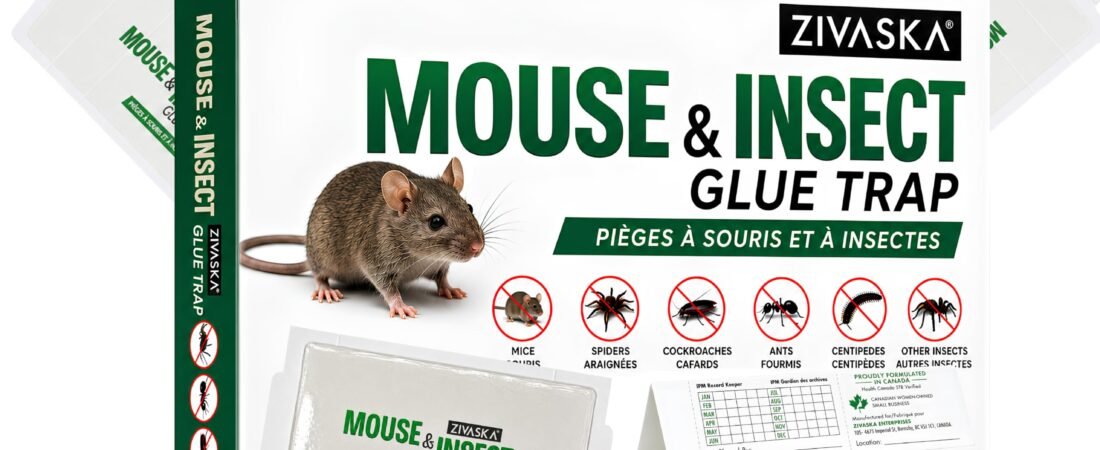
Inside the house, for mice and crawling insects: glue traps. For rats, or anything outside and in the garage: a rat-sized snap trap.
Glue traps are not made for rats; rats can pull free.
Side by side
| Sticky glue traps | Rat traps (enclosed snap) | |
|---|---|---|
| Best for | House mice, cockroaches, spiders, silverfish, centipedes, crickets, ants | Rats and larger mice |
| Where | Dry indoor spots: kitchens, pantries, under sinks, behind appliances, basements, attics | Decks, sheds, garages, fence lines, around bins; indoors for rats |
| How it works | Adhesive board, flat or folded into a tunnel | Enclosed spring mechanism with a trigger plate |
| After a catch | Dispose of the board | Empty, clean and reset |
| Not for | Rats; wet or dusty outdoor areas | Small mice (they may not trip a rat-sized trigger) |
Use both for a mixed problem
Many homes have mice inside and rats outside. Use glue traps along interior baseboards and a few rat traps in the garage and yard.
Frequently asked questions
Do glue traps work on rats?
Glue traps are not made for rats. Rats are strong enough to pull free, so use a rat-sized snap trap instead.
Do rat traps catch mice?
A rat trap can catch larger mice, but small mice may not be heavy enough to trip a trigger built for rats. For mice indoors, sticky glue traps are the better choice.
Which is better indoors?
For mice and insects indoors, glue traps. For rats indoors, use a rat-sized snap trap.
ZIVASKA is a Canadian, women-owned small business in Burnaby, BC. Free shipping across Canada; orders ship within 1 business day.